

A Phuket hotel or resort running air conditioning, pools, kitchens, and laundry 24/7 faces one of the highest electricity bills of any business type. Solar rooftop systems have become a standard cost-reduction tool for the hospitality industry — and in Phuket's climate, the return on investment is among the fastest available.
How Much Does a Phuket Hotel Spend on Electricity?
- Small boutique hotel (10–20 rooms): 30,000–80,000 THB/month
- Mid-size resort (30–80 rooms): 100,000–300,000 THB/month
- Large resort / hotel (80+ rooms): 300,000–1,000,000+ THB/month
- Air conditioning accounts for 50–60% of total consumption in Phuket's climate
What Can Solar Realistically Save?
| Monthly Bill | System Size | Est. Investment | Monthly Saving | Payback |
|---|---|---|---|---|
| 50,000–100,000 ฿ | 30–50 kW | 600,000–1,000,000 ฿ | 15,000–40,000 ฿ | ~3–4 years |
| 100,000–300,000 ฿ | 50–150 kW | 1,000,000–3,000,000 ฿ | 40,000–120,000 ฿ | ~2–3 years |
| 300,000+ ฿ | 150–500 kW | 3,000,000–9,000,000 ฿ | 120,000–400,000 ฿ | ~2–3 years |
On-grid rooftop solar, daytime load offset. Actual savings depend on roof area, daily occupancy rate, and kitchen/laundry operating hours.
Why Hotels in Phuket Get Especially Good ROI
- High daytime load — kitchens, laundry, housekeeping, and common areas all run during solar peak hours (8 AM–5 PM), maximising direct self-consumption
- Large flat roof areas — most hotel buildings have extensive flat rooftops ideal for high-density panel installation
- High commercial electricity rate — hotels pay commercial tariffs which are higher per unit than residential, making each unit saved by solar worth more
- ESG and guest expectations — international travellers increasingly choose eco-certified properties; solar is a tangible, marketable sustainability credential
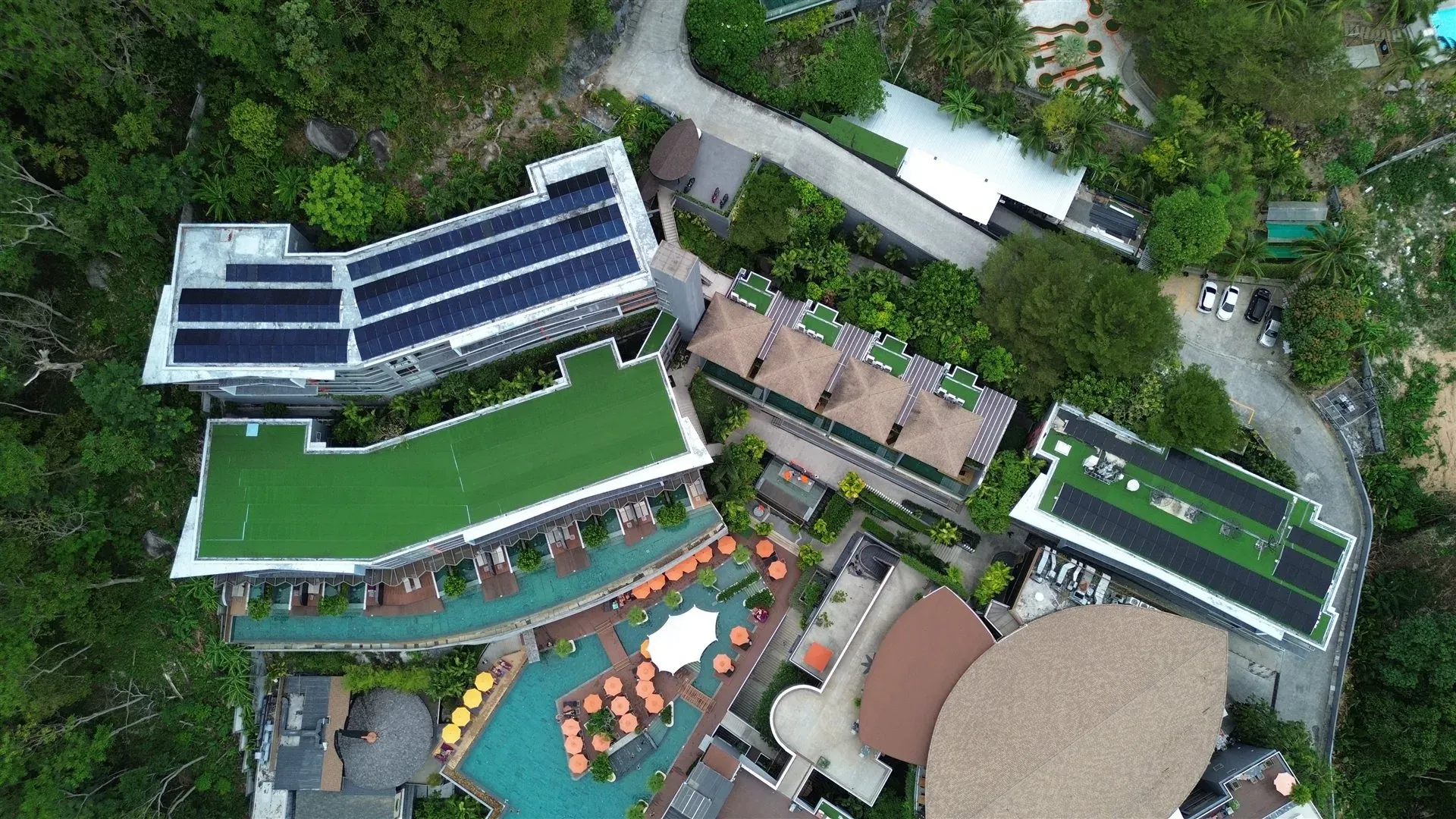
We provide a detailed energy audit and ROI proposal for commercial and hospitality projects at no cost. Our engineers analyse your electricity bills, roof plan, and occupancy data to design the most cost-effective system.
Update (October 2026): BOI incentives for solar have changed. Since 1 July 2025, BOI no longer promotes solar installations under its renewable-energy efficiency measure — so don't count a BOI tax exemption in your hotel's solar payback. Read our article on what changed and what may still qualify.
Frequently Asked Questions
Can solar cover the full electricity bill of a hotel?
Not typically with rooftop solar alone — hotels use electricity 24/7 while solar only produces during daylight. A well-designed on-grid system can offset 30–50% of total consumption. Combined with energy efficiency improvements (LED lighting, inverter A/C), some boutique properties achieve 60–70% offset.
Does installation disrupt hotel operations?
We plan all commercial installations to minimise disruption. Roof work is typically done in sections during low-season periods. Electrical connections to the main distribution board are scheduled for off-peak hours (late night or early morning). Most hotels operate normally throughout installation.
Are there any grants or incentives for commercial solar in Thailand?
Updated October 2026: BOI (Board of Investment) used to offer corporate income tax exemptions for solar installed by qualifying businesses, but since 1 July 2025 it no longer promotes solar installations under its renewable-energy efficiency measure (BOI Announcement No. 3/2568). Battery storage may still qualify case by case — see our article "Can Businesses Still Get BOI Incentives for Solar in 2026?" for details. The Department of Alternative Energy Development and Efficiency (DEDE) also runs periodic programmes. Our team can advise on current incentives applicable to your project.
What is the minimum system size worth installing for a hotel?
For commercial properties, we generally recommend a minimum of 20–30 kW to justify the project management and permitting overhead. Below that, the economics still work but the per-unit installed cost is higher. Contact us for a no-obligation site assessment.