
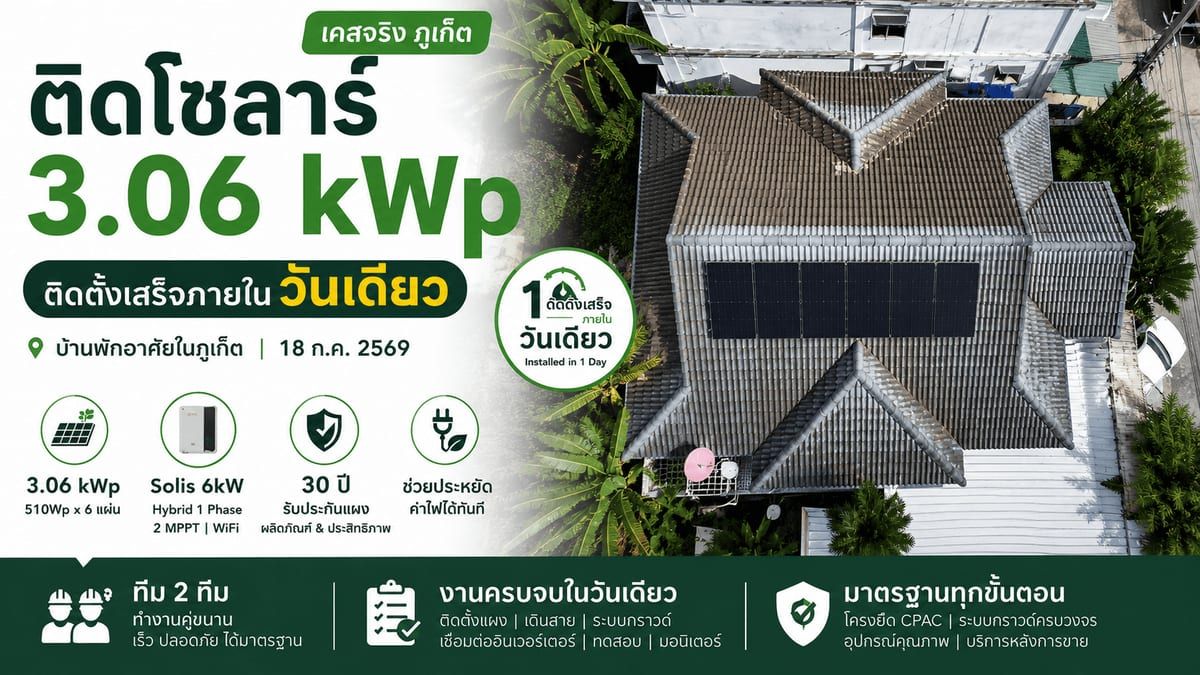
Last Saturday, our team installed a 3.06 kWp rooftop solar system on a traditional tiled-roof home in Phuket — and finished the entire job, from panels to a fully connected inverter, in a single day. Here's a look at the system and how two teams working in parallel got it done that fast.
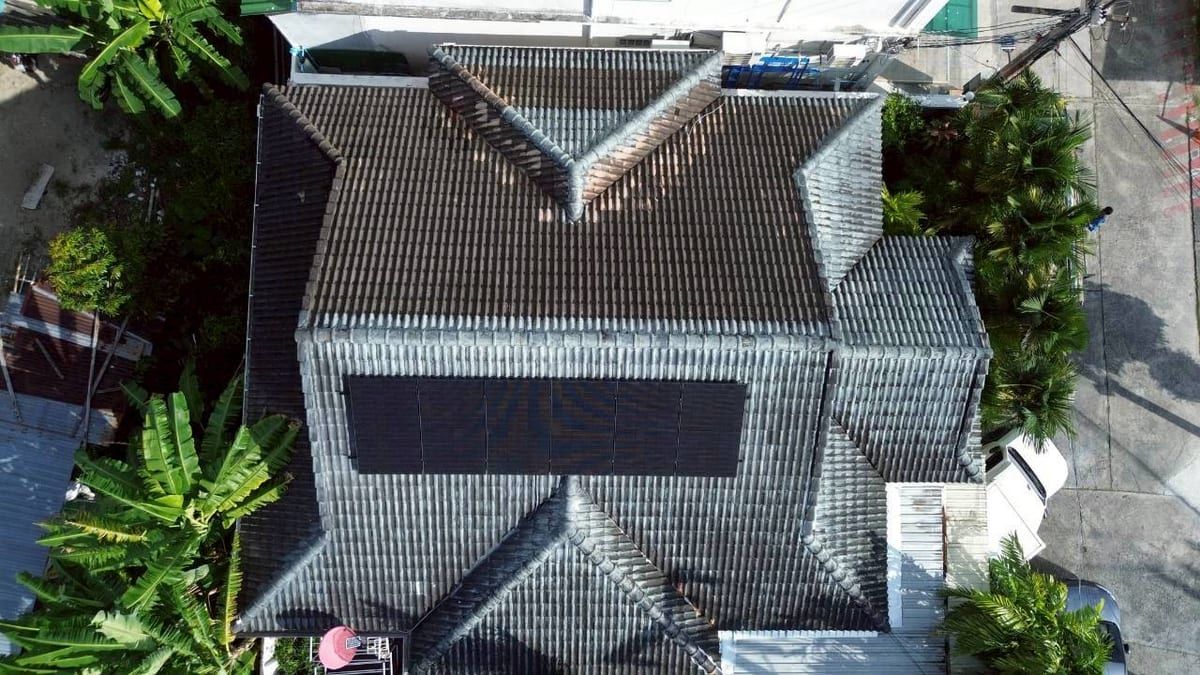
The System
| Component | Detail |
|---|---|
| Solar panels | SONNEX TopCon Mono 510Wp × 6 panels — 3.06 kWp total |
| Inverter | Solis 6kW Hybrid, 1-phase, 2 MPPT, WiFi remote monitoring |
| Mounting | CPAC roof mounting rail system with grounded clamps |
| Grounding | Copper grounding rod with full DC/AC bonding |
| Panel warranty | 30-year product warranty + 30-year linear performance warranty |
Full spec sheet for this 3.06 kWp residential system.
Two Teams, One Day
A 3 kW residential system is relatively compact — just 6 panels — but finishing installation and commissioning in one day still takes coordination. We split the work between two teams running in parallel: a roof team handling the mounting rails and panels, and an electrical team running DC/AC cabling, grounding, and the inverter connection at the same time. Instead of one team doing everything in sequence, both halves of the job were moving at once.
- Roof team: installed the CPAC mounting rails, secured all 6 panels, and completed grounding and end/mid clamps.
- Electrical team: ran PV DC cabling with MC4 connectors and a DC isolator, then mounted and wired the Solis hybrid inverter into the home's existing distribution board.
- Both teams finished around the same time, allowing the system to be powered on, tested, and connected to WiFi monitoring the same afternoon.
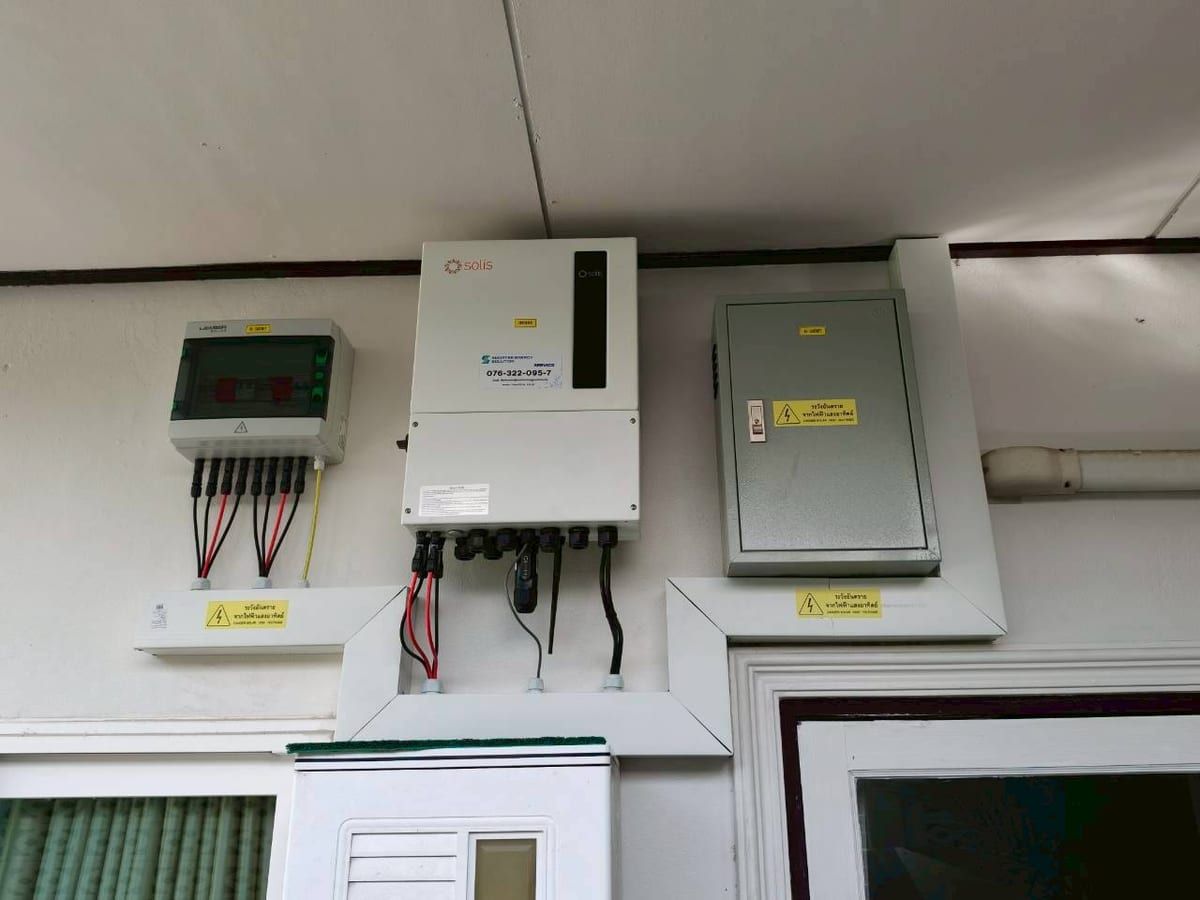
Why a 6kW Hybrid Inverter for a 3kW Array?
It's common practice to pair a smaller panel array with a larger hybrid inverter. Sizing the inverter above the array leaves headroom — for example, room to add more panels or a battery later — without needing to replace the inverter itself. It's a small design choice made during system planning, not something added after the fact.
Wondering if your roof could be done just as fast? Installation timelines depend on system size and roof complexity, but a well-planned job with the right team split can move quickly. Book a free site survey to get a real timeline and quote for your home.
Frequently Asked Questions
Can every solar installation be finished in one day?
Not always — timelines depend on system size, roof type and complexity, and whether any structural or electrical upgrades are needed first. Smaller residential systems like this 3.06 kWp array, on a straightforward roof with good access, are the best candidates for a same-day install. Larger commercial systems typically take several days.
Does a faster install mean lower quality work?
No — speed here came from having two full teams working different parts of the job at the same time, not from skipping steps. Grounding, cable management, and connection testing were all completed to the same standard as a multi-day install.
Why install a small 3 kW system instead of a larger one?
System size should match the roof space available and the homeowner's actual electricity usage — a bigger system isn't automatically better if it doesn't match how much power the home actually needs. A proper site survey and usage review determines the right size for each home.